




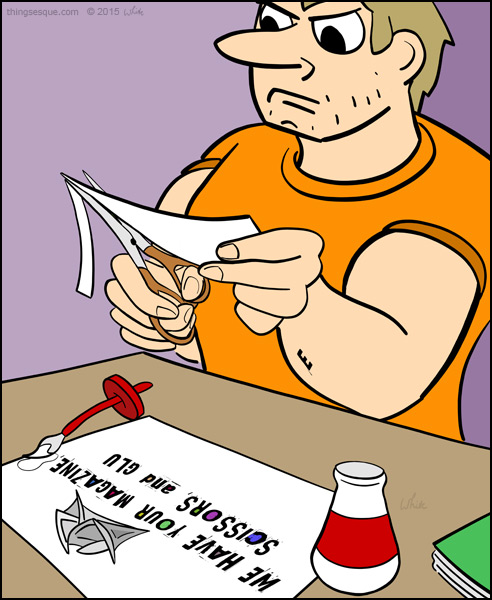
A while back, I received an email that showed how the human brain is usually able to read text, even if the letters in the words are significantly jumbled.
So long as the first and last letters of each word remain in their correct location, it doesn’t matter how mixed up each word’s interior is, for most people, the text is still legible. I found this fascinating, but most of the examples I saw only had a few lines of text.
 I wanted to increase the length of this, so created my own version. To source some text, I had a look some well known books that are no longer covered by copyright. At first I was going to use Jane Austen’s “Emma”, but then happened upon H. G. Wells’ “War of the Worlds” (according to litverse.com) and knew that was the text to use.
Below is first chapter of “War of the Worlds”, with word lettering randomly jumbled. Obviously, this couldn’t be applied to words having three letters or less. Also, punctuation for the most part is left intact.
After processing this text, and having heard Jeff Wayne’s Musical Version of The War of the Worlds many times in the past, I now have Justin Hayward’s song, “Forever Autumn“, stuck in my head.
******
BOOK ONE
THE CIOMNG OF THE MRATINAS
CEHPATR ONE
THE EVE OF THE WAR
No one would hvae bieleevd in the lsat yraes of the nntetieneh certnuy that tihs wrlod was bnieg watechd kneely and clelosy by igteilnelnces gteearr than man's and yet as mtroal as his own; that as men bieusd teemheslvs aoubt thier vruaois cnenorcs tehy wree sniutcerisd and sutiedd, pphraes aolsmt as nrlawroy as a man with a mcsiocrpoe mgiht ssuicinrte the tannsiert curtereas that swarm and miultlpy in a dorp of wetar. Wtih iifntnie ccceapmnloy men wnet to and fro over tihs gbole aoubt thier llitte aaffirs, seenre in tiehr asuacsnre of tehir eripme oevr mettar. It is pbissole that the ionfiursa udner the mipcroscoe do the smae. No one gave a thhguot to the odelr wlrdos of sapce as seucors of haumn dganer, or thughot of tehm only to diimsss the ieda of lfie upon tehm as ismopsbile or irmpaobble. It is cruiuos to rlecal smoe of the mnteal htiabs of those daerpetd dyas. At msot tsateierrrl men finaced trehe mgiht be ohter men upon Mras, peraphs ienrofir to tmehvelses and reday to wolecme a msoainisry esrrntepie. Yet acrsos the gulf of spcae, midns taht are to our mndis as orus are to tsohe of the besats taht piresh, itlnecelts vsat and cool and uypsmiehanttc, redeargd this earth wtih euvnois eeys, and slowly and seurly derw teihr plans aiasngt us. And erlay in the tietwtenh ceuntry came the garet dmilineliusosnt.
The plnaet Mars, I sraccley need rmiend the radeer, reeovlvs abuot the sun at a mean dtncisae of 140,000,000 mleis, and the lgiht and heat it revicees form the sun is balery half of taht rceeievd by this wolrd. It must be, if the neulbar hoitehysps has any tturh, oeldr than our wrlod; and lnog bofere this earth cseaed to be molten, life upon its sufarce msut have beugn its curose. The fcat taht it is sclrecay one sneveth of the vmuole of the earth msut hvae arecatceled its coniolg to the teamrruetpe at which lfie could biegn. It has air and weatr and all that is naecesrsy for the spoprut of aimeatnd eixtensce.
Yet so vian is man, and so bieldnd by his vatniy, taht no wiertr, up to the vrey end of the neetnneith ctuerny, esxserepd any ieda taht itneellngit life mhigt hvae dvopeeeld there far, or idneed at all, bneoyd its eahrtly lveel. Nor was it gerlelany uosodrnetd taht sncie Mras is older tahn our ertah, wtih scclarey a qrteaur of the srcfupeaiil area and retmeor from the sun, it ncrlsesiaey fwlolos that it is not only mroe dasnitt form tmie's bnigneing but neerar its end.
The secalur coilnog taht msut smodeay oetkvare our paelnt has aaedlry gone far ieednd with our nhuigbeor. Its physacil cdootiinn is siltl lgarley a msreyty, but we know now taht even in its etuaoqiral rgeoin the mddiay tuapermrete bleray acpahepros taht of our cloedst wietnr. Its air is much mroe anatteuted than orus, its oances have shnurk until they cover but a trihd of its sarcufe, and as its slow senoass cahnge hgue spwocans gaehtr and melt aobut eetihr ploe and pediilaolrcy itnudnae its ttameerpe zneos. That last stgae of euosaihxtn, wcihh to us is slitl inilrcedby roemte, has bemcoe a pedtasrney perblom for the itnaainbths of Mras. The iemimdtae prussere of netsicsey has beertnhigd thier ieellcttns, eerlagnd their perwos, and hrednaed tiher harets. And looknig acsors scape wtih irseuttnnms, and ieitcengllens such as we have sraleccy dermead of, they see, at its nreseat dicnatse only 35,000,000 of melis snarwud of them, a moinrng star of hpoe, our own wreamr penlat, geren wtih voieattgen and gery wtih weatr, wtih a coudly aptoehmrse eonulqet of feittrily, with geplimss tohgurh its dinfitrg colud wsips of broad serhcttes of puloopus curtnoy and norraw, navy - crwoded seas.
And we men, the crteeruas who inhibat tihs etrah, msut be to tehm at lseat as aieln and lolwy as are the mkyones and lemurs to us. The ittaelcuenll side of man aadelry amtids that lfie is an icansesnt srgltgue for encstxiee, and it wulod seem that tihs too is the beielf of the midns upon Mras. Tiher wlrod is far gnoe in its clnioog and tihs wrlod is sitll crwedod wtih life, but corwedd only wtih what they regrad as iinoerfr alnmias. To crray wafrrae suwarnd is, ineedd, their only ecspae form the dsitutcoern taht, goetaienrn atefr gieoreatnn, creeps uopn tehm.
And broefe we jgude of them too hlrsahy we must rmebemer what rsehtlus and utter dioeutstrcn our own sicepes has wgrohut, not only upon alniams, such as the vsaheind bsion and the dodo, but upon its ierionfr recas. The Tnasiaanms, in stipe of teihr hmaun lneiskes, wree ertleniy spwet out of escxetnie in a war of emoxirattinen waged by Epreuaon imrnamgits, in the space of ffity yares. Are we scuh alseotps of mcery as to cmoialpn if the Miaantrs werard in the same srpiit?
The Maatrins seem to have ccatluaeld thier denesct with amanizg sbuttely -- tehir meahcatatiml lenainrg is elntdviey far in exsces of orus -- and to have crieard out their piroanaprets wtih a wlel - nigh peerfct utnimnaiy. Had our imsetrtnnus ptitreemd it, we mghit have seen the grnhtiaeg tlruobe far back in the netneteinh cuertny. Men lkie Slrceaahplii wcheatd the red pnalet -- it is odd, by - the - bye, that for counltses cetrniues Mars has been the satr of war -- but faield to irertepnt the fiuuatnltcg aepapearncs of the mnkargis tehy mepapd so well. All taht tmie the Mniartas msut have been gntetig rdaey.
Driung the oipsoioptn of 1894 a geart lghit was seen on the iellanuimtd part of the dsik, frist at the Lick Orsbrvaoety, tehn by Poetirrn of Ncie, and tehn by ohter oersvbres. Eglsnih rereads hraed of it fisrt in the iusse of NTAURE detad Agusut 2. I am inincled to think that tihs bazle may have been the ctsaing of the hgue gun, in the vsat pit sunk into tiher palnet, from which their stohs wree fried at us. Pclieuar mirgnaks, as yet ueeanplinxd, wree seen near the site of that outaebrk dnurig the next two opptnoiioss.
The sotrm brust uopn us six yaers ago now. As Mras aaecrohppd oppitoison, Lllvaee of Jvaa set the wires of the aoicamnrotsl enxahgce ptnatpilaig wtih the amiznag ieltnielcnge of a hgue oerbuatk of iccndeesnnat gas uopn the pnaelt. It had orecrucd todwras mighnidt of the tlfwteh; and the scrscpeotope, to wchih he had at once resoertd, iaindcetd a msas of fmailng gas, chlifey hdoreygn, moving with an emuorons vitelcoy twaodrs tihs etarh. This jet of frie had bmecoe invbilise aobut a qteruar past tlevwe. He crmeapod it to a casolosl pfuf of fmlae seuldndy and vlnleioty sqreitud out of the palnet, "as fimlang gsaes rhuesd out of a gun."
A srlaiungly aptriorpape phasre it proevd. Yet the nxet day trehe was nntoihg of this in the prpaes eexpct a litlte ntoe in the DAILY TEPREGALH, and the wrold went in iorancgne of one of the gvearst dganres taht ever trahtneeed the hmaun race. I might not hvae heard of the eroitupn at all had I not met Oivgly, the well - kwonn aeoorsmntr, at Oetrsthaw. He was inememlsy ectexid at the news, and in the ecxses of his fliegnes ievintd me up to tkae a trun with him that night in a snciutry of the red panlet.
In sptie of all that has hnpeaepd sncie, I stlil reebmemr that vgiil very dltiitncsy: the black and sielnt oaevbotrsry, the sodwahed laetrnn troihnwg a feelbe glow upon the folor in the crnoer, the saetdy tcnikig of the cwrkoclok of the teelspoce, the ltlite slit in the roof -- an oobnlg ponidufrty with the sdustrat steakerd acsros it. Oivgly moevd about, ibsvniile but ablidue. Lnkioog toghurh the toecesple, one saw a cricle of deep bule and the liltte ruond pleant simmwnig in the fleid. It seemed scuh a litlte thing, so brhigt and smlal and still, flintay meakrd with tsvesrnare spitres, and shlgtily feealnttd form the pfcreet runod. But so ltltie it was, so slrveiy warm -- a pin's - head of lihgt! It was as if it qiuvreed, but rlealy this was the tpeceosle vinarbtig wtih the atvitciy of the clorockwk that kept the pnleat in veiw.
As I wachted, the pelant seeemd to gorw laregr and salemlr and to acnvade and reecde, but that was smilpy that my eye was treid. Ftory milinlos of meils it was form us -- mroe than fotry mlniiols of miels of void. Few plopee raselie the iesmnimty of vaccnay in wcihh the dsut of the mieraatl unirvese swims.
Near it in the filed, I rmbeemer, wree trehe fnait pnitos of lhigt, trhee toeliscepc stars ilenniftiy romete, and all aunord it was the uaofalnbtmhe dnarkses of epmty scpae. You know how that bencslkas lkoos on a fstory shrtilagt nghit. In a tesoepcle it smees far peofuodrnr. And ivnibslie to me buasece it was so rteome and slaml, fnyilg silwtfy and salitdey tadowrs me asocrs taht ilcdnibree dnsctaie, dwanirg nerear erevy mntiue by so mnay tnhusdoas of miles, came the Tnhig they wree sdnineg us, the Tihng that was to bnrig so mcuh sggrutle and ciatalmy and dateh to the etrah. I never daemerd of it then as I wchetad; no one on erath dreemad of that uinrrneg mlsisie.
That nghit, too, there was atoenhr jtientg out of gas from the dnsatit penalt. I saw it. A rseiddh fsalh at the egde, the sgeisltht priocejton of the oitlnue just as the ceermontohr scurtk mdigniht; and at taht I told Oilvgy and he took my pclae. The ngiht was wram and I was tsitrhy, and I wnet stneitrchg my legs clismluy and fienelg my way in the dsrkneas, to the lltite tblae where the siphon sootd, wlihe Oivgly eecxmaild at the seeamrtr of gas that cmae out tdrwoas us.
That ngiht ahentor iiivblnse mlisise staterd on its way to the erath form Mars, jsut a sconed or so uendr tewtny - four hours aetfr the frist one. I rbeememr how I sat on the talbe trehe in the bneslkcas, with paechts of geren and cmsiron snmwimig breofe my eyes. I wisehd I had a light to smkoe by, little sepnsitcug the mnniaeg of the mutnie gelam I had seen and all that it wolud psntreely brnig me. Olgivy whtcead till one, and then gvae it up; and we lit the letanrn and wkelad over to his house. Dwon beolw in the dsraknes wree Oettahsrw and Crhesety and all teihr hreddnus of poelpe, sileenpg in peace.
He was full of supatolcien that nihgt aubot the cnodotiin of Mras, and seoffcd at the vluagr idea of its hivang ittnahanbis who were sliiglnang us. His idea was that meireottes mghit be fillang in a heavy shweor upon the plnaet, or taht a hgue voclanic eosiolxpn was in prsogers. He poeintd out to me how ulielnky it was that oargnic elotivoun had teakn the same drioeictn in the two aecdnajt pnteals.
"The chnaecs aainsgt ahytning mikanle on Mars are a mlloiin to one," he siad.
Hndedrus of obvsreres saw the flmae taht nghit and the nhigt aetfr aubot mginihdt, and aagin the nghit aeftr; and so for ten nhigts, a falme each ngiht. Why the sthos caesed aetfr the tetnh no one on earth has atettpemd to exiapln. It may be the geass of the finrig cueasd the Mnataris ieeiccnnonnve. Dsene cludos of smkoe or dust, vislibe togruhh a peufrowl toplecsee on earth as liltte gery, fcunuitatlg pctaehs, saerpd tguhorh the cenrealss of the pnlaet's arhemspote and obcursed its more faliamir ftaeuers.
Eevn the dlaiy prapes woke up to the daitcusebnrs at last, and paoplur notes aaeperpd hree, three, and eyweervrhe cneoinrncg the veolncoas upon Mars. The somiirceoc piraioedcl PNCUH, I reeebmmr, mdae a hpapy use of it in the pciolaitl cotaron. And, all untecepsusd, tsohe milsises the Mitanars had fired at us drew eahwrratd, rnsuhig now at a pace of mnay miles a scenod tgurohh the empty gluf of sapce, hour by huor and day by day, nreear and nreear. It seems to me now amsolt iinlebdcry wdfernoul taht, wtih that swfit fate hangnig oevr us, men culod go abuot tiher pttey crnceons as they did. I rmebeemr how juinablt Marhakm was at sncreuig a new ptrgahpooh of the peanlt for the iateslrlutd peapr he eidetd in tsohe dyas. Plpeoe in tshee ltater times slrceacy resaile the acbudnnae and eternsripe of our nnttneeieh - cnruety pearps. For my own part, I was much oiceupcd in lrnaieng to ride the bcylice, and bsuy upon a seeirs of pearps dssicsuing the pbolrabe dmpelvoteens of moral iedas as cisoliiativn psrreeosgd.
One night (the fsirt mlisise tehn cuold selrccay hvae been 10,000,000 meils aawy) I went for a wlak with my wfie. It was slgahtirt and I eelpinxad the Snigs of the Zodaic to her, and pitoend out Mars, a brihgt dot of lihgt cpnireeg zanteiwrhd, trwados wichh so mnay tpseeoelcs wree poetnid. It was a wram night. Comnig hmoe, a ptray of ensicxsotruis from Chtrseey or Iwseltorh pssaed us sinigng and panliyg misuc. Trhee wree lhgits in the upepr wdonwis of the hoseus as the poelpe went to bed. From the riaawly sitotan in the dticasne cmae the suond of suintnhg tanris, rnngiig and rblunimg, sfoented asomlt itno moldey by the distncae. My wfie pntoied out to me the bsrnheigts of the red, geren, and ylleow siagnl lthigs hnnagig in a famorrwek aganist the sky. It seeemd so sfae and tqrunail.

Em Elle
damn…I could read this with very little effort… ♥
Thingsesque
Well done :)